When Should Kids Start Coloring? A Simple Age-by-Age Guide
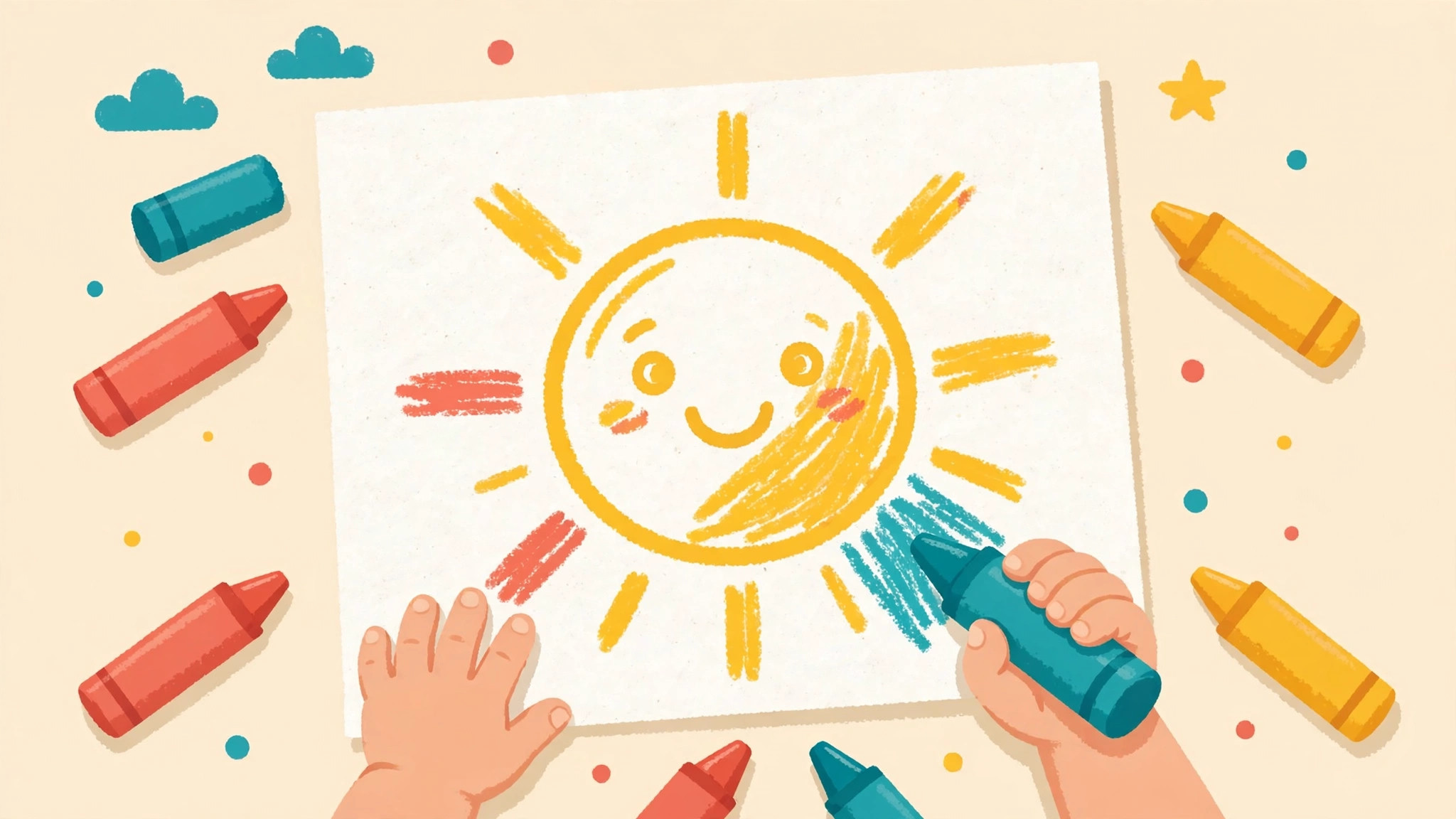
Hand a one-year-old a crayon and something wonderful happens: a wild scribble, a huge grin, and probably a taste test. Coloring is one of the first creative skills children ever practice, and parents often wonder when to start, what is normal at each age, and which crayons or coloring pages actually suit their child. This simple age-by-age guide walks you through it. Remember as you read: children develop at wildly different speeds, so treat these ages as friendly landmarks, not deadlines.
Signs your child is ready for a first crayon
Most children are ready to explore crayons somewhere between 12 and 18 months. Look for these signs: your toddler can grasp chunky objects and bang them on purpose, enjoys making marks or messes, and can sit with an activity for a few minutes. The biggest readiness rule is safety, not skill: a child who still mouths everything needs constant supervision and large, non-toxic crayons that cannot be bitten into small pieces.
Ages 12 to 18 months: joyful scribbling
What to expect: Whole-arm scribbles in big arcs, a fist grip, and short bursts of interest — two minutes of coloring is a long session at this age. Marks may land on the paper, the table, and occasionally the wall. Best tools: Extra-chunky crayons, palm-grip crayons, or thick egg-shaped crayons made for toddler hands. Best pages: Honestly, blank paper. If you use printables, pick single huge shapes — one giant apple, one big circle — with very thick outlines.
Ages 18 months to 2 years: scribbles with intent
What to expect: Scribbling becomes deliberate. Your child experiments with dots, lines, and circular scribbles, and begins to announce what the picture "is" — even if adults cannot tell. The fist grip starts loosening. Best tools: Chunky crayons and thick washable markers (washable matters — this is the wall-artist era). Best pages: Big, simple pictures with one main object, like a single fish or a big balloon. Coloring "inside" anything is not a goal yet; exploring color and movement is.
Ages 2 to 3: circles, control, and color choices
What to expect: Many children begin drawing rough circles and can scribble inside a large shape on purpose, at least some of the time. They start choosing colors deliberately ("the sun is purple because I like purple") and can color for five to ten minutes. Best tools: Regular chunky crayons, short crayons, and washable markers. Best pages: Simple coloring pages with thick lines and familiar objects — animals, vehicles, fruit. Pages with a few large areas suit them better than detailed scenes.
Ages 3 to 4: staying in the lines begins
What to expect: This is the classic coloring age. Children start trying to stay inside the lines, use more realistic colors, and may grip the crayon with their fingers instead of their fist. Sessions stretch to ten or fifteen minutes, and children develop strong opinions about their favorite pages. Best tools: Standard crayons, colored pencils for detail-lovers, and fine-tip washable markers with supervision. Best pages: Characters, simple scenes, and themed pages — dinosaurs, princesses, trucks — with medium-sized areas.
Ages 4 to 5: detail and patience grow
What to expect: Coloring becomes neater and more planned. Children choose color schemes, color different parts of a picture in different colors, add backgrounds, and happily tackle pages that would have frustrated them a year earlier. Many begin combining coloring with tracing letters and numbers. Best tools: A full crayon box, colored pencils, and gel pens for special projects. Best pages: Detailed scenes, patterns, mandalas for beginners, and activity pages that mix coloring with mazes or matching.
Ages 5 to 6 and beyond: coloring as a real hobby
What to expect: Older children shade, outline before filling, stay patiently with intricate pages, and use coloring to relax — a habit many keep for life. Best pages: Complex mandalas, detailed animals, pattern art, and "color by number" pages that sneak in math practice.
Choosing the right page at any age
| If your child... | Choose pages with... |
|---|---|
| Is just starting out | One huge object, extra-thick outlines |
| Gets frustrated easily | Large open areas, few details |
| Finishes in one minute | More detail, patterns, smaller areas |
| Loves a theme | Characters and scenes from that theme |
What coloring is quietly teaching
Coloring looks like simple fun, but underneath it is serious preparation for school. Every session strengthens the small hand muscles your child will later use to write letters without tiring. Holding a page steady with one hand while coloring with the other builds the two-handed coordination needed for cutting, tying shoes, and opening lunch containers. Choosing colors, planning a picture, and finishing it exercises decision-making and concentration — many teachers say a child who can happily color for fifteen minutes is showing exactly the focus a kindergarten classroom asks for. Coloring also gives children a calm, screen-free way to unwind and express feelings they cannot yet put into words, which is why so many classrooms keep a coloring corner long after the toddler years.
Simple safety and comfort tips
- Always choose crayons and markers labeled non-toxic, and supervise toddlers.
- Tape the paper to the table for beginners — a sliding page frustrates small hands.
- Set your child up at a table where their feet rest on something solid; dangling legs make controlled coloring harder.
- Display finished art proudly. A picture on the fridge tells your child their work matters, which fuels the next session far better than any correction.
Coloring is a marathon of small joys, not a race. Wherever your child is on this path — first scribble or fiftieth mandala — the right page is simply the one they are excited to pick up. If you're ever concerned about your child's development, your child's teacher or pediatrician can help you understand what's typical at their age.
Frequently Asked Questions
What crayons are best for a one-year-old?
Choose the chunkiest crayons you can find: palm-grip or egg-shaped crayons made for toddlers, always labeled non-toxic. They are easy for a fist grip to hold and hard to break or bite into pieces. Keep sessions short, supervise closely, and expect scribbles on everything except the paper sometimes.
My 4-year-old still can't stay in the lines. Is that normal?
Yes, completely. Staying in the lines develops gradually between ages three and six, and plenty of kindergartners still color outside them. It depends on hand strength, practice, and interest. Offer pages with larger areas and thick outlines, praise effort, and avoid correcting — neatness arrives on its own schedule.
Are coloring apps as good as paper coloring?
Apps can be fun, but paper coloring builds more: gripping a real crayon, controlling pressure, and coordinating both hands strengthens the same muscles used for writing. Think of paper as the main course and apps as an occasional snack. A printed page also gives you artwork for the fridge.
How do I get my child interested in coloring?
Start with their obsessions: if they love trucks, print truck pages. Color alongside them — children copy what adults enjoy. Keep supplies visible and easy to grab, display their finished work, and never force a session. A page left invitingly on the table often works better than an instruction.