Screen-Free Activities for Toddlers That Actually Hold Their Attention
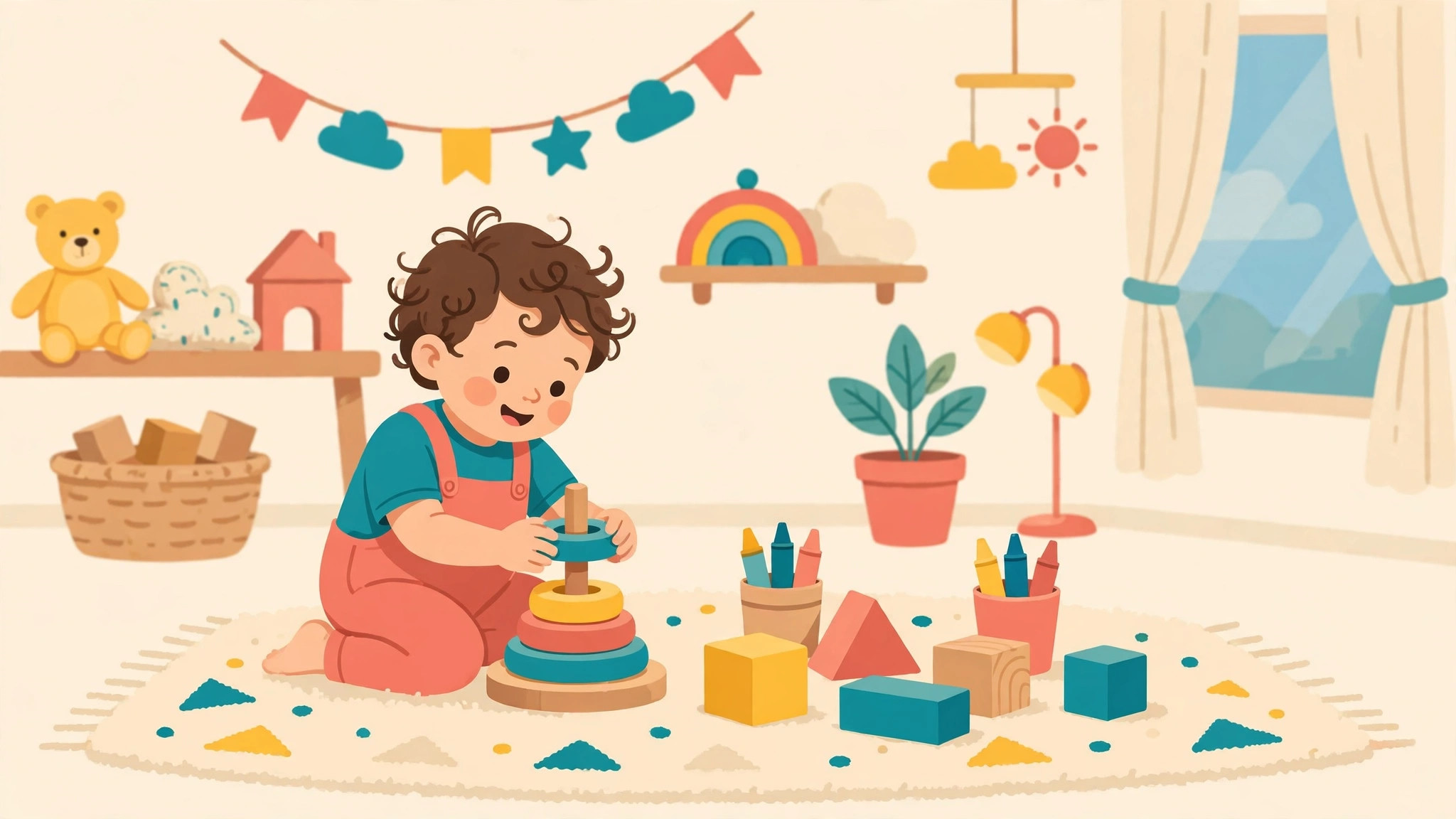
Here is the honest truth nobody puts on the activity box: a toddler's attention span is short, and that is healthy. Most one- and two-year-olds focus on one activity for two to eight minutes before wandering off, and even a brilliant activity will often be "done" in five. So the goal of screen-free time is not one magical activity that lasts an hour. It is a small rotation of simple, inviting activities that your toddler can start easily, enjoy briefly, and leave without a battle, while you rotate fresh ones in.
Match the activity to the attention span
Toddlers engage longest with activities that use their whole body or their senses: pouring, scooping, squeezing, stacking, carrying, and climbing. Quiet, fine-motor activities are wonderful too, but expect them in shorter bursts. Plan in a toddler's units: aim for several five-minute pockets of play across the day rather than one long block, and treat every extra minute of focus as a bonus rather than the requirement.
Ten activities that genuinely work
- Water pouring station. A basin of water, two cups, and a towel underneath. Pouring back and forth can hold a toddler longer than almost any toy you can buy.
- Scooping and transferring. Dry pasta or large pom-poms moved between bowls with a big spoon. Simple, repetitive, and strangely meditative for little hands.
- Sticker pages. Big dot stickers on plain paper or a printed page. Peeling stickers is a serious workout for toddler fingers and a favorite quiet activity.
- Cardboard box play. A large box becomes a car, a house, a boat, and a coloring surface. Crayons plus box equals a surprisingly long session.
- Playdough pressing. Skip the sculpting expectations. Toddlers love poking, flattening, and pressing objects like buttons or pasta shapes into dough.
- Ball roll-back game. Sit on the floor, legs apart, and roll a soft ball back and forth. The social back-and-forth is what makes it last.
- Stacking and knocking down. Blocks, cups, or empty food containers. The knocking down is not the failure of the activity; it is the activity.
- Nature collection walk. A small bucket and a mission: find leaves, sticks, and interesting stones. Carrying the bucket is half the fun.
- Dance freeze. Music on, dance; music off, freeze. Toddlers are hilariously bad at freezing, which is exactly why they love it.
- Chunky puzzles and shape sorters. Choose ones with just a few large pieces, and put the rest away so success comes quickly.
Set up a simple rotation
Too many choices overwhelm toddlers and shorten play, so borrow the preschool trick: put out a few activities, and keep the rest stored away. A simple weekly rhythm might look like this:
| Day | Morning activity | Afternoon activity |
|---|---|---|
| Monday | Water pouring | Sticker page |
| Tuesday | Playdough pressing | Ball roll-back |
| Wednesday | Scooping station | Box coloring |
| Thursday | Stacking cups | Nature walk collection |
| Friday | Shape sorter | Dance freeze |
When an activity returns after a few days away, it feels new again. Swapping takes two minutes and buys you far more engagement than buying new toys.
When your toddler wanders off in 30 seconds
It will happen, often right after you spent ten minutes setting something up. Before you conclude the activity failed, try these adjustments: sit down and start playing with it yourself without inviting them (toddlers are drawn to whatever you are enjoying), shrink the activity to fewer pieces, or move it to a different spot, since a change of scenery can restart interest completely. And sometimes a toddler who will not scoop pasta at 10 a.m. is simply hungry, tired, or needs to run around first. Movement before quiet play is a reliable sequence: wiggle first, focus second.
Make the setup do the work
How an activity is presented changes how long it lasts. A single bowl of pom-poms on a small tray invites focus; the same pom-poms buried in a giant mixed toy bin get ignored. Trays, mats, and small baskets create a visible boundary that tells a toddler, "this is one thing to do," and carrying the tray to the table adds a satisfying job at the start. Place the activity somewhere your toddler already likes to be, keep pieces chunky enough to grab easily, and clear away the leftovers of the last activity before starting a new one. A tidy, simple setup looks boring to adults and magical to toddlers, because they can see exactly what their hands are supposed to do with it.
Keep a "yes basket" for hard moments
Every parent needs a rescue plan for cooking dinner, work calls, and rainy afternoons. Keep one basket or bin that only comes out at those moments, stocked with high-interest items: a new sticker sheet, a wind-up toy, washi tape and paper, a set of chunky crayons with a fresh coloring page, or a favorite board book. Because these items stay special, they hold attention better than everyday toys. Rotate the contents every week or two so the basket never goes stale.
When nothing works, go outside
Some days every indoor activity flops, and the answer is usually not a better activity but a change of air. A ten-minute reset outside can rescue an entire morning: splash in a puddle, push a toy stroller around the block, collect sticks, or simply run between two trees you point to. Big movement burns off the restlessness that makes quiet play impossible, and toddlers often return indoors ready to focus on the very activities they rejected an hour earlier. Keep the bar low: shoes on, out the door, no destination required. Fresh air is the oldest screen-free activity there is, and it asks almost nothing of you beyond showing up.
A gentle word about expectations
Screen-free does not have to mean all day, every day, and using a show while you shower or finish a work call does not undo the benefits of the play your child gets the rest of the time. Aim for a healthy balance you can actually sustain, because a plan you keep beats a perfect plan you abandon. If you're ever concerned about your child's play or development, your child's teacher or pediatrician can help you figure out what support, if any, would be useful.
Frequently Asked Questions
How long should a toddler play with one activity?
Two to eight minutes is a normal range for one- and two-year-olds, and some activities will hold attention for fifteen minutes or more on a good day. Brief is not a problem to fix. Build the day from several short pockets of play instead of expecting long stretches of focus.
What if my toddler just dumps everything out and leaves?
Dumping, scattering, and carrying things around are legitimate toddler play, not misbehavior. Offer smaller quantities, like six pom-poms instead of sixty, and choose containers that are interesting by themselves. Sit nearby and model the activity slowly. Often the dumping phase passes once the novelty of the container wears off.
Are coloring pages suitable for toddlers this young?
Yes, if you choose the right kind: very large, simple pictures with thick outlines, and chunky crayons or washable markers that do not need much pressure. Expect scribbling outside the lines, and all over them, because that is exactly what coloring looks like at this age, and it builds hand skills.
How do I manage screen-free time when I need to work?
Plan for it instead of hoping for it. Keep a special basket of high-interest activities that appears only during your work blocks, set it up next to you rather than in another room, and stack the odds with a snack and a movement break first. Short focused bursts from your toddler are a realistic win.