Rainy Day Activities for Kids at Home: A Whole Afternoon of Printable Fun
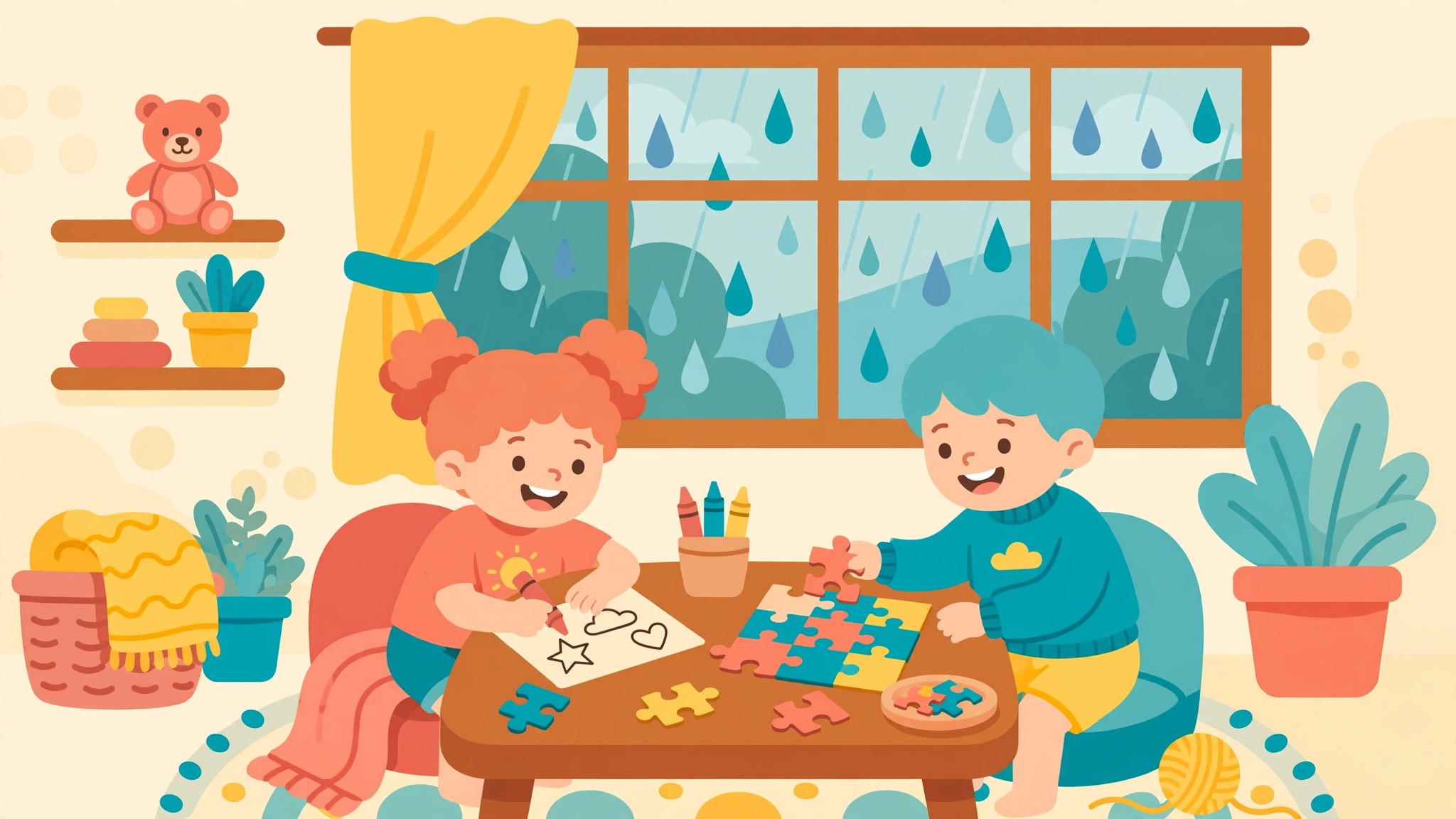
The rain starts at lunchtime, the park trip is cancelled, and by 2 p.m. everyone is climbing the furniture. Rainy afternoons feel endless when they have no shape, but they become surprisingly manageable when children know what is coming next. This plan uses one simple idea: divide the afternoon into four blocks, give each block a clear job, and let printable activities do most of the heavy lifting. You do not need expensive supplies or a Pinterest-perfect setup. A small stack of printed pages, crayons, scissors, and a rough order of events will carry a three-to-eight-year-old from lunch to dinner without the day dissolving into screens and squabbles.
Why a plan beats a pile of activities
Handing a restless child a random coloring page rarely buys more than ten minutes. What actually holds attention is predictability plus variety: children relax when they can see the shape of the afternoon, and they stay interested when the activity type keeps changing. The four blocks below rotate between moving, making, thinking, and winding down, which matches how young children naturally cycle through energy. Write the blocks on a piece of paper and stick it on the fridge. Younger children can draw a small picture next to each block. When a child asks what happens next, point to the chart instead of negotiating.
| Block | Job | Example activities | Rough length |
|---|---|---|---|
| 1. Move it out | Burn off energy first | Movement cards, dance break, hallway bowling | 20-30 minutes |
| 2. Printable stations | Focused tabletop fun | Coloring, tracing, mazes, dot-to-dot | 40-60 minutes |
| 3. Build and pretend | Open-ended creating | Paper crowns, puppets, cut-and-paste scenes | 30-45 minutes |
| 4. Cozy finish | Calm the day down | Story time, simple puzzles, quiet coloring | Until dinner |
Block 1: Move it out first
Never start a rainy afternoon sitting down. Children who have been indoors all morning need to move before they can focus, so begin with ten printable movement cards: jump like a frog, spin like a leaf, tiptoe like a cat, stomp like a dinosaur. Shuffle them face down and let children take turns flipping one over and leading it. Follow with hallway bowling using plastic bottles and a soft ball, or a two-minute dance party to one favorite song. End the block with three slow breaths together. This small ritual tells everyone that wild time is over and table time is starting, which makes the transition far easier.
Block 2: Set up printable stations
Instead of one activity for everyone, lay out three simple stations on the table or floor and let children rotate freely. Choice is the magic ingredient: a child who picks her own page will work on it twice as long as one who was handed it.
- Coloring station: four to six coloring pages at different detail levels, plus crayons and markers in a tray.
- Pencil-skills station: tracing lines, letter tracing, and a maze or two for older children.
- Cutting station: safety scissors, a glue stick, and cut-and-paste pages, with a small bowl for scraps.
Set a kitchen timer for the block rather than for each page, and keep a finished-work folder for every child so pages do not spread across the house. Put on quiet background music if your family enjoys it; many children settle noticeably faster with a predictable soundtrack. For a four-year-old, expect ten to fifteen minutes per station. For a seven-year-old, one detailed maze can happily take twenty.
Block 3: Build and pretend
Mid-afternoon is when energy dips and bickering starts, so switch from worksheets to making something children can play with. Printable paper crowns, animal masks, finger puppets, and build-a-scene pages all work well because the making is only half the fun; the pretend play afterwards can run for half an hour with no adult input. Try this sequence: each child makes a paper crown, decorates it with the crayons already on the table, then the crowns hold a royal parade around the living room and settle down for a royal snack. Younger children may only manage the decorating step, and that is completely fine. The goal is absorption, not a finished product.
Block 4: The cozy finish
Protect the last stretch of the afternoon. Dim the main lights if you can, bring out blankets, and switch to the calmest materials: a favorite picture book read aloud, a simple word search for older children, or one last coloring page done lying on a cushion. This is also a good moment for a warm drink and a small snack. Ending the afternoon slowly matters because children who go straight from wild play to the dinner table usually bring the wildness with them.
Build a rainy day bin once, use it all year
The real time-saver is preparing before you need it. Fill one box or tote bag on a dry day: twenty assorted printed pages in a folder, crayons, markers, safety scissors, a glue stick, stickers, a timer, and one surprise item such as a new sticker book. Keep the bin out of everyday sight so its contents feel special when it appears. After each rainy day, spend five minutes restocking pages and replacing anything worn out. Rotate the printable themes with the seasons so returning children find something unfamiliar: pumpkins in October, snow scenes in January, gardens in April.
When the plan wobbles
Some afternoons will still go sideways, and that is normal. If siblings argue over pages, print duplicates of the disputed one rather than refereeing; paper is cheap. If a child rejects every station, shrink the choice to two pages and sit down and color alongside them for five minutes; company beats novelty. If you have mixed ages, give the older child a helper job, like being in charge of the movement cards, which turns a maturity gap into an advantage. And if the whole plan collapses into a movie by 4 p.m., let it. The plan is a tool for you, not a test anyone has to pass.
Frequently Asked Questions
How many printables should I prepare for one rainy afternoon?
Ten to fifteen pages per child is plenty for a full afternoon when you mix coloring, tracing, mazes, and one craft page. Print a few extras of the most popular theme, because siblings often want the same page, and duplicates end arguments faster than taking turns ever will.
My child loses interest in a page after two minutes. What helps?
Shrink the job and add company. Offer two pages instead of a stack, sit down and color your own page beside them, and praise specific effort like careful staying inside lines. Short, successful sessions build stamina better than insisting a child finish every page completely.
Can this plan work with both a three-year-old and an eight-year-old?
Yes, because the blocks are the same while the pages change. Give the younger child big simple shapes, thick crayons, and tearing or sticker work, and give the older child detailed mazes, word searches, and cutting tasks. Shared movement breaks and the parade keep everyone together.
What if I do not have a printer ready on the rainy day?
Use the same four-block shape with what you have: movement games, drawing on scrap paper, building with boxes, and story time. Then print a rainy day folder during the week and keep it in the bin, so the next wet afternoon starts prepared instead of improvised.