Quiet Time Activities for Kids Who've Dropped the Nap
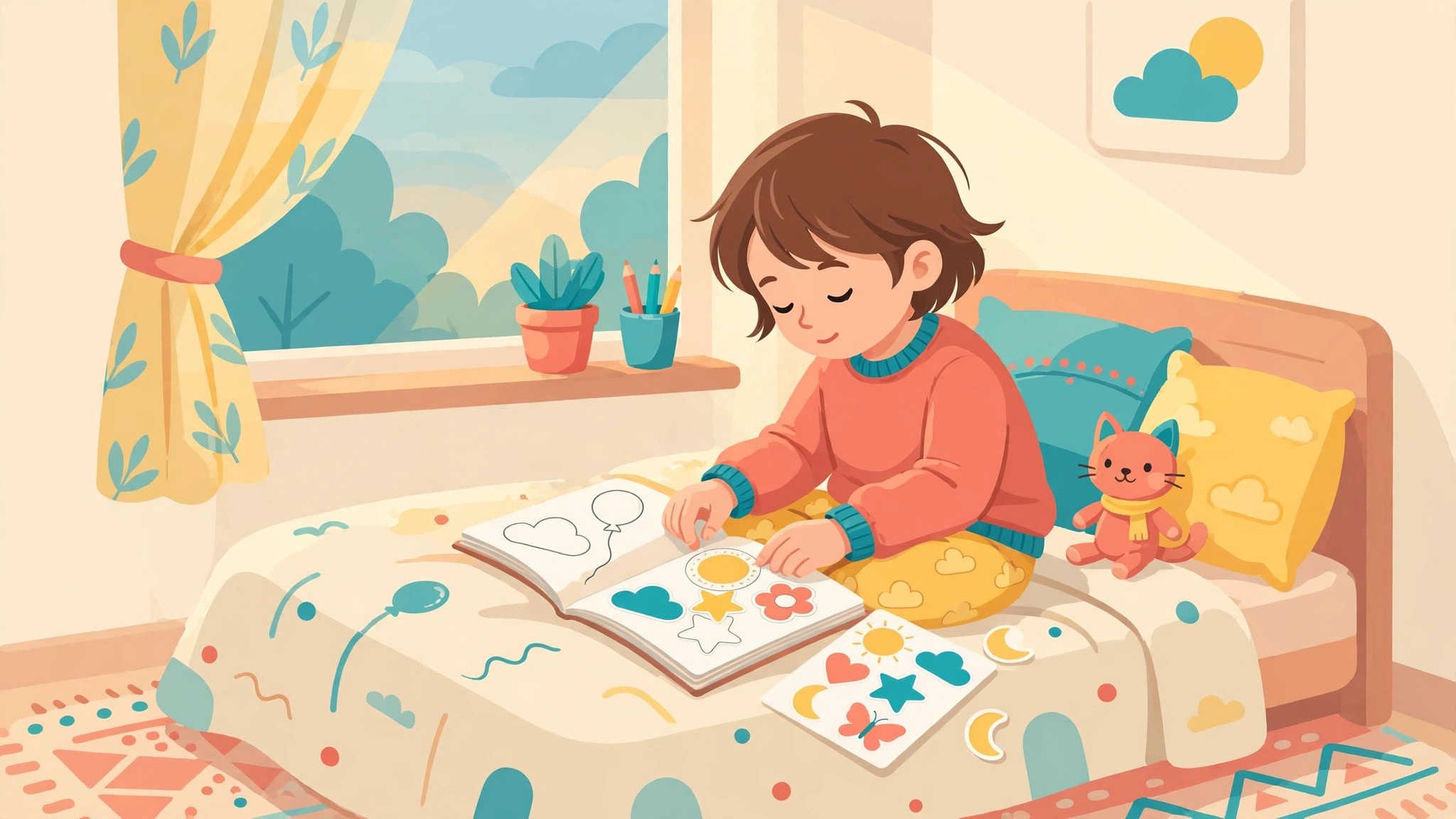
It happens somewhere between ages two and four: your child stops napping, and the two peaceful hours in the middle of your day vanish with it. The fix isn't forcing sleep that won't come — it's quiet time: a daily period where your child plays independently and calmly in a safe space while everyone in the house recharges. Here's how to build one that actually works.
Why quiet time matters
Children who no longer nap still need downtime. Without it, late afternoons tend to fill with the overtired meltdowns every parent recognizes. A predictable quiet time gives your child's brain a low-stimulation break, practices independent play — a skill that grows only with practice — and protects a slice of the day for parents to work, rest, or simply finish a hot drink. Small as it sounds, that protected pause compounds quietly across weeks into a noticeably calmer household.
Set it up for success
Pick the time and place
Anchor quiet time to the old nap slot, right after lunch, when energy naturally dips. The child's bedroom works best: familiar, safely childproofed, and separate from the household buzz. Remove anything unsafe or overstimulating, and add a cozy corner — pillows, a blanket, a small lamp.
Set three simple rules
- Stay in the room (except bathroom trips).
- Play quietly — soft voice, gentle hands.
- Stay until the timer or light says done.
A visual timer or a wake-up light that changes color makes "done" concrete for a child who can't read a clock.
Start short and grow it
Begin with just 15–20 minutes, even if the old nap was two hours. End while it's still going well, praise the success, and add five minutes every few days. Most families settle at 45–90 minutes within a few weeks. Quitting early and often at the start is the fastest route to a long, peaceful quiet time later.
The quiet-time box: your secret weapon
Prepare a small box or basket of activities that appears only at quiet time. Specialness is what makes ordinary items magnetic. Rotate the contents every few days so it always feels new. Good box items are quiet, open-ended, and manageable by one child alone:
- Printables: coloring pages, mazes, tracing sheets, and dot-to-dots — naturally quiet, zero setup, and a clipboard plus crayons is all they need.
- Books and look-and-find books: familiar favorites plus one fresh library book.
- Puzzles: one or two at the right difficulty — challenging, not frustrating.
- Sticker scenes and reusable sticker pads: silent, absorbing, and tidy.
- Magnets, blocks, or a small building set: quiet construction for busy hands.
- Lacing cards and threading beads (for older preschoolers): fine-motor practice disguised as play.
- Audio stories or music on a simple player: listening counts as rest, and headphones keep it peaceful.
A sample afternoon
| Time | What happens |
|---|---|
| 12:30 | Lunch ends; bathroom, drink, pick today's box together |
| 12:45 | Quiet time starts; timer set, door routine done |
| 1:00–1:45 | Independent play: printables, puzzle, audio story |
| 1:45 | Light changes/timer ends; tidy the box, snack together |
Troubleshooting the bumpy days
- "I'm done!" after four minutes. Calmly restate the timer rule and leave. Attention at this moment teaches that calling out works.
- Everything ends up everywhere. Shrink the box. Two or three activities tidy more easily than ten.
- Your child falls asleep sometimes. Wonderful — let them. Quiet time that becomes a nap is a feature, not a failure.
- Siblings share a room. Stagger start times by ten minutes, give each child their own box and defined space, and use headphones for audio.
- Weekends fall apart. Visitors and outings tempt everyone to skip "just today." Keep a shortened 20-minute version instead of cancelling — a small, kept routine survives Monday far better than a broken one.
What quiet time is — and isn't
Quiet time works only if it stays clearly separate from discipline. Never send a child to quiet time as a consequence for behavior, and never describe it as being "in trouble" — the moment it feels like punishment, the calm evaporates and resistance moves in. It also isn't a test your child can fail. A child who spends the whole session lying on the bed looking at picture books has done quiet time perfectly. Rest looks different for different children: some build, some draw, some mostly daydream with a stuffed animal. All of it counts. Your job is the time, the place, and the materials; what your child does inside that frame is theirs.
A gentle two-week ramp
- Days 1–3: Stay in the same room or just outside the door. Fifteen minutes, three activities, big praise afterward. Presence is the training wheels.
- Days 4–7: Move out of sight. Set the timer, do one brief mid-session check at most, and add five minutes every other day.
- Week 2: Introduce the rotating box if you haven't yet, stretch toward your target length, and let your child help choose Friday's box contents — ownership buys cooperation.
- After week 2: Protect the routine on weekends too. Skipping days is the most common reason quiet time falls apart after a good start.
Quiet time beyond the bedroom
Once the home routine holds, a pocket version travels anywhere: a small pouch with a mini coloring pad, a few crayons, and a sticker sheet covers restaurant waits, appointment delays, and long car rides far more calmly than a phone handed over in desperation. Grandparents' houses and holidays run smoother when the same timer, box, and rules show up there too — children relax into routines they recognize, wherever they happen.
Quiet time rarely works on day one. It works on day fifteen, after short wins, kind consistency, and a box of printables that feel like treasure. Stick with it — the whole household's afternoons are about to get much calmer, including yours.
Frequently Asked Questions
How long should quiet time last?
Start with 15 to 20 minutes and build gradually. Many preschoolers happily settle into 45 to 90 minutes once the routine and the special activity box are established. End on success rather than pushing to exhaustion — a good finish today buys a longer session tomorrow.
What if my child refuses to stay in the room?
Make the space appealing, keep sessions short, and be calmly consistent about the boundary — return them without a long negotiation. A visual timer helps enormously, because the rule becomes 'when the light changes,' not a power struggle with you. Most children accept the routine within one to two weeks.
Is screen time okay during quiet time?
An occasional show is fine, but screens work against quiet time's purpose: they stimulate rather than rest, and stopping them often causes fresh battles. Audio stories, coloring, mazes, and puzzles deliver the calm reset you're actually after. Save screens for a different part of the day.
My child gets bored with the quiet-time box. What then?
Boredom usually means the box stopped rotating. Swap contents every few days, add one new printable theme each week, and occasionally include a surprise — a fresh puzzle or library book. Keep the box exclusive to quiet time; scarcity is what keeps it exciting.