How to Teach Letters at Home (Without Boring Your Child)
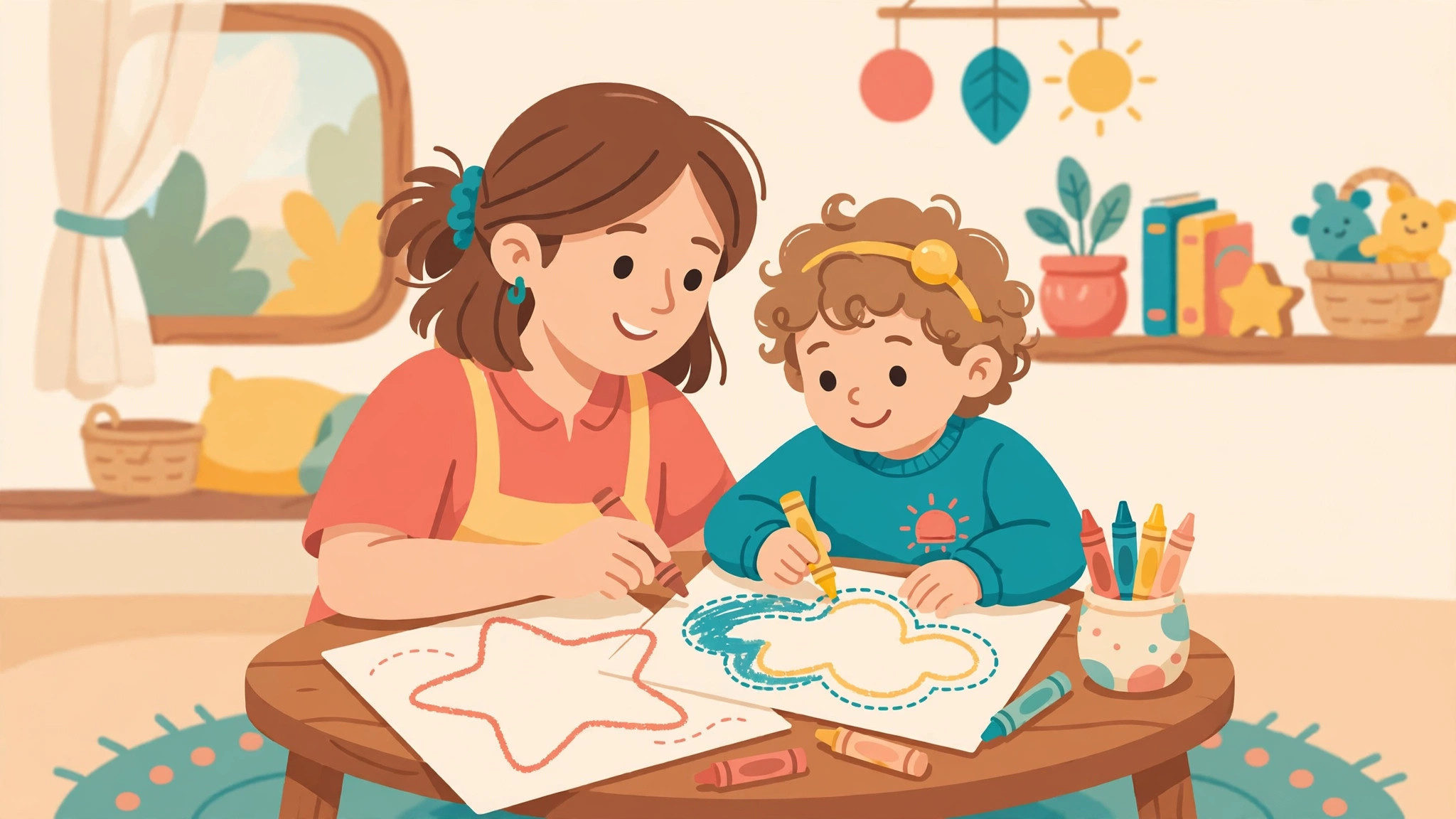
Here is a secret most preschool teachers know: young children rarely learn letters from sitting still and being drilled. They learn them from playing — spotting letters on a cereal box, tracing them in a sandbox, or winning a silly game at the kitchen table. The good news is that you do not need a curriculum, flashcards marathons, or a teaching degree. You need ten playful minutes a day, a few simple routines, and this plan.
Start with the most important word in the world: their name
The first letters almost every child learns are the ones in their own name, and that is exactly where you should start. A name matters to a child, so its letters stick. Write your child's name in big, clear letters and tape it to their bedroom door, their cup, and the fridge. Say the letters like a cheer when you see it: "E-M-M-A — Emma!" Print a name-tracing sheet and let them trace it each morning. Once they own the letters in their name, they already have a head start of three to six letters, learned with zero tears.
The two golden rules
Rule one: keep it short. Five to ten focused minutes beats thirty minutes of forcing. Little attention spans are normal, and a session that ends while it is still fun leaves your child wanting more tomorrow. Rule two: play first, worksheet second. A printable is a great tool, but it works best after your child has touched, built, hunted, or moved the letter with their whole body. Think of every letter as something to play with before it is something to write.
Five playful ways to learn any letter
1. The letter hunt
Pick one letter — say, B. For the whole day, your family hunts for B everywhere: on signs, books, food packages, license plates. Keep a tally on the fridge. Kids adore beating yesterday's score, and they are secretly learning to recognize the letter in every font and context.
2. Trace it big before you trace it small
Writing starts big. Draw a giant letter on a driveway with chalk, in shaving cream on a tray, or in a shallow box of salt or sand. Tracing with a whole arm builds the letter's shape into your child's memory far better than starting on a tiny worksheet line. Move to paper printables only after the big version feels easy.
3. Build the letter
Straight sticks and curves can build almost every letter. Use craft sticks, pipe cleaners, playdough snakes, or even cooked spaghetti. "A is two slanted sticks with a bridge." Building letters teaches children the parts of letters, which later makes writing them much less mysterious.
4. Alphabet parking lot
Draw a parking lot with a letter in each space (a printable works perfectly). Call out a letter, and your child "parks" a toy car on it. Swap roles and let them stump you — deliberately park on the wrong letter sometimes and let them catch you. Being the teacher is the most powerful learning position of all.
5. Letters hide in every story
When you read together, pause once or twice per book: "Can you find a T on this page?" Point to letters in titles, and run your finger under words as you read. This simple habit, repeated nightly, quietly teaches that letters carry meaning.
What order should you teach the letters?
Not A-B-C order. Alphabetical order is a filing system, not a learning system. Two approaches work better. First, teach the letters of your child's name. Then, move to letters that appear constantly in simple words — s, a, t, p, i, n, m, d are popular early choices because children can quickly blend them into real words like sat, pin, map, and nap. Introduce lowercase letters early alongside capitals, because most letters in real books are lowercase. Keep capitals for names and sentence starts, just like real reading.
A simple weekly rhythm
| Day | 10-minute activity |
|---|---|
| Monday | Introduce one new letter: build it, trace it big |
| Tuesday | Letter hunt around the house or on a walk |
| Wednesday | Tracing or coloring printable for that letter |
| Thursday | A game: parking lot, letter fishing, or bingo |
| Friday | Review the week — "letter party" with a favorite snack |
One new letter a week sounds slow, but with review built in, children typically remember far more than with five rushed letters. Repeat a week whenever you like; repetition is not falling behind, it is how memory works.
Using letter printables the smart way
Printables earn their place when you use them as games rather than tests. Pick pages with one large letter and a picture that starts with its sound — A beside an apple, S beside a sun. Have your child say the sound out loud while tracing, first with a finger, then with a crayon. Pages with dotted letters inside a coloring picture are gold at this stage, because coloring the letter's shape teaches its outline without feeling like handwriting practice. When a page is finished, hang it up. A growing alphabet parade across a hallway wall gives your child a reason to revisit every letter daily, and most children will happily "read" their wall to any visitor who will listen.
Mistakes that make kids push back
- Correcting every attempt. If your child writes a B backwards at age four, that is developmentally normal. Praise the try, model the right way casually, and move on.
- Sessions that only end when they get it right. End on a win instead — ask one easy question last.
- Comparing with siblings or classmates. Letter learning speed varies enormously between ages three and six, and early speed does not predict later reading success.
- Worksheets as the whole plan. Printables are one tool in the box. If a child only ever meets letters sitting down, the letters stay boring.
Above all, protect the feeling. A child who believes "letters are fun and I am good at them" will learn the whole alphabet in good time. If you are ever concerned about your child's progress, your child's teacher or pediatrician can help you understand what to expect at their age.
Frequently Asked Questions
How long should letter practice last each day?
Five to ten minutes is plenty for most three- to five-year-olds. Short, cheerful sessions protect your child's enthusiasm, which matters more than total minutes. You can sprinkle extra letter moments into the day — spotting letters on signs or in books — without calling it practice at all.
Should I teach uppercase or lowercase letters first?
Teach both, but give lowercase letters plenty of attention early, because the vast majority of letters children see in books are lowercase. Start with the letters in your child's name, using a capital first letter and lowercase for the rest, exactly as their name appears in real life.
My child mixes up b and d. Should I worry?
Letter reversals like b and d are very common until around age seven and usually sort themselves out with reading experience. Gentle tricks help: b has a 'bat before the ball,' and making a thumbs-up 'bed' with both hands shows b on the left and d on the right.
Do I need to buy a curriculum or workbooks?
No. A small set of free printables, a library card, chalk, and everyday objects can carry the whole job. Paid programs mostly add structure, not magic. If a routine helps you stay consistent, that is its real value — the games and reading time do the actual teaching.