How to Choose Age-Appropriate Worksheets (Not Too Easy, Not Too Hard)
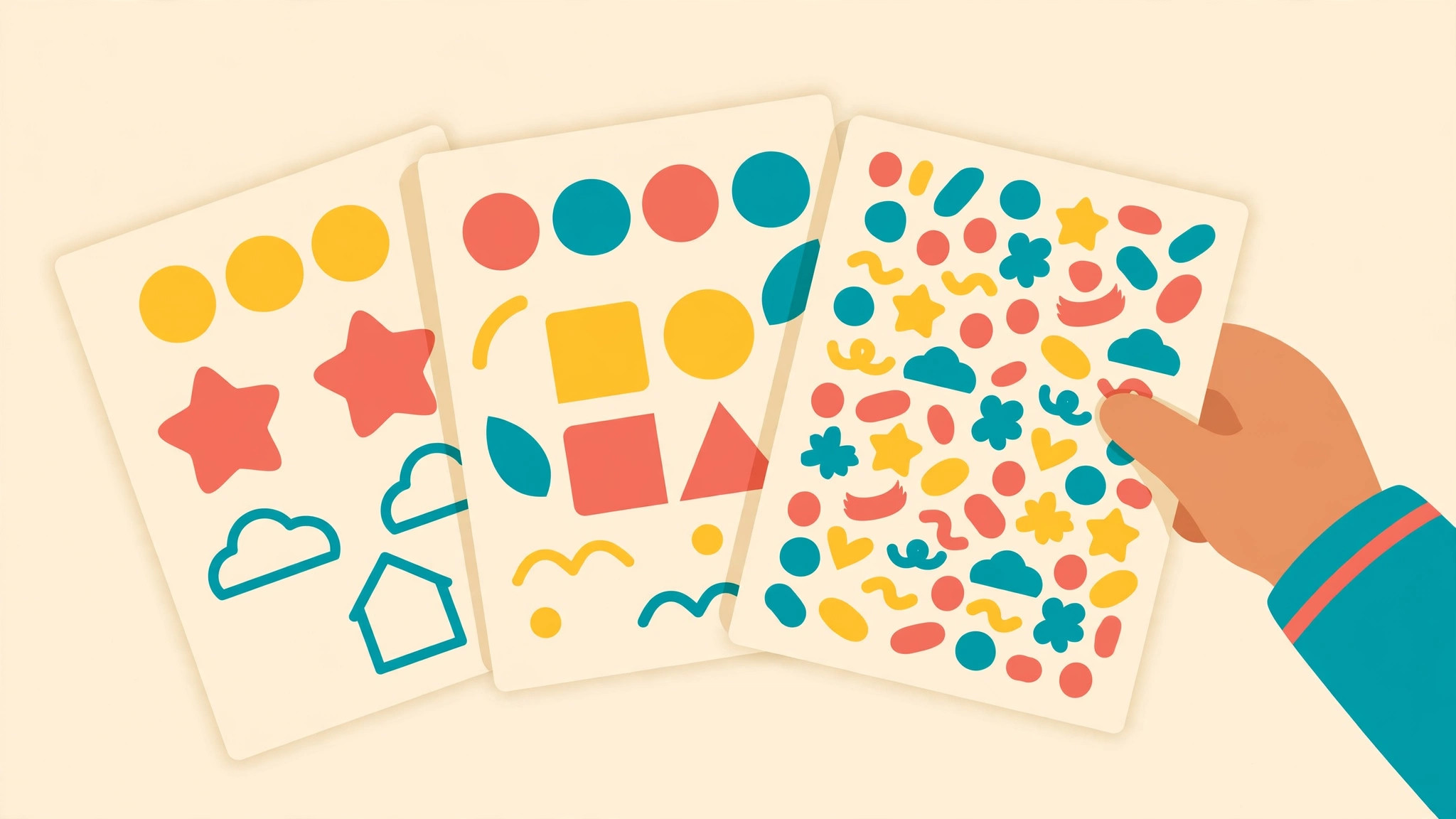
Every parent who prints worksheets knows the two failure modes. The too-easy page is finished in forty seconds with eye-rolls. The too-hard page ends in tears — sometimes the child's. The worksheet in the middle, the one that makes a child think "this is tricky… but I can do it," is where learning actually happens. The trick is learning to spot that middle zone before you waste paper and goodwill on the wrong page.
Here is a simple system for choosing well, based on skills rather than the age label printed in the corner.
The just-right test
Before printing a stack, look at one page and ask three questions:
- Can my child do about 80% of this alone? If they can already do everything, it is review, not growth. If they cannot start without you, it is too hard for independent work.
- Is there exactly one new thing? A page that practices letter sounds and introduces blending and has tricky instructions teaches none of them well.
- Does it look doable? Big print, generous spacing, and a picture or two signal "you can handle this." Dense pages overwhelm young children before they begin.
Signs a worksheet is too easy or too hard
| Signal | Too easy | Too hard |
|---|---|---|
| Speed | Finished in under a minute, carelessly | Stalls on the first line for several minutes |
| Errors | None, but messy and rushed | Most answers wrong or guessed |
| Body language | Sighing, doodling, "this is baby work" | Fidgeting, tears, sudden need for snacks |
| Questions | None — on autopilot | Needs help with every single item |
One hard day does not mean a page is wrong — tiredness and mood matter. But if the same signals appear three times with similar pages, believe them and adjust the level.
What "just right" looks like by age
Ages 3–4: Play skills
Look for tracing lines and curves, matching, coloring inside simple shapes, finding the odd one out, and counting objects up to 5. Fine-motor control is the real curriculum at this age — the "academics" are a bonus. Pages should be mostly pictures with very few instructions.
Ages 4–5: School readiness
Letter and number tracing, beginning sounds (which picture starts with B?), counting to 20, simple patterns, and cutting practice. One clear task per page, with an example done for them at the top. Children this age need to succeed almost every time to stay willing.
Ages 5–6: Early readers and counters
Writing letters and numbers unaided, simple CVC words (cat, pig, sun), addition to 10 with pictures, sequencing stories, and reading short sentences. A little challenge is now welcome — roughly one item in five should make them pause and think.
Ages 6–7: Building independence
Addition and subtraction to 20, word families, reading comprehension with one or two questions, telling time, and simple word problems. Pages can hold more items, but white space still matters more than quantity.
Judge the skill, not the birthday
Age ranges on worksheets are averages, and averages describe nobody's actual child. A five-year-old who has been read to nightly may read like a seven-year-old and count like a four-year-old — and both can be perfectly normal. Choose per subject: reading pages at the level where they read smoothly, math pages at the level where they must think. If you are ever concerned about your child's progress in any area, your child's teacher or pediatrician can help you understand the full picture.
Adapt any worksheet in 30 seconds
- Too hard? Do the first two together, cover half the page with a blank sheet, or let them answer by pointing or speaking while you write.
- Too easy? Add a twist: "Now write the number after." "Find one more pair." Turn it into a speed game against their own best time.
- Too long? Cut the page — literally. Half a finished page beats a whole abandoned one.
A printing strategy that saves paper and peace
Print one page of a new set first and treat it as a test drive. Watch the signals in the table above. If it fits, print the rest; if not, adjust the level before the stack exists. Keep a "just right" folder of proven pages for independent moments — travel, waiting rooms, the ten minutes while dinner finishes — and revisit the level every couple of months, because the right challenge is a moving target as your child grows.
Does paying more get a better fit?
Not reliably. Expensive workbooks and free printable pages succeed or fail by the same test: whether the level matches your child. Paid sets do tend to offer tidier progression — skills build in a sensible order — while free pages give you freedom to cherry-pick exactly the skill you want this week. Many families do best with a hybrid: one structured workbook as the spine, plus free single pages for extra practice, games, and the topics your child currently loves. Judge every page, free or paid, by the three just-right questions.
Build a balanced week, not a pile of pages
Once you know your child's level in each subject, plan a light weekly mix instead of printing whatever appears first in a search:
- Two strength pages — skills they do well, for confidence and fluency.
- Two stretch pages — the current growing edge, done with you nearby.
- One fun page — a maze, puzzle, or coloring-by-numbers page of their choosing.
This rhythm guarantees that most worksheet time feels successful, a meaningful slice feels like progress, and Friday's fun page keeps the whole enterprise welcome. If the stretch pages start looking easy two weeks in a row, congratulations — move that subject up one level and rebalance. Growth, not the stack of paper, is the scoreboard.
The best worksheet is not the hardest one your child can survive. It is the one they finish feeling capable — and slightly prouder than when they started.
Frequently Asked Questions
The pack says ages 5–7 but my 5-year-old finds it too hard. What is wrong?
Nothing is wrong — age labels are broad averages, and a pack spanning three years aims at the middle. Judge by the skill test instead: if your child cannot do roughly 80% independently, drop to the level where they can, regardless of the label. Confidence now beats labels later.
How many worksheets a day is reasonable?
For children under seven, one or two short pages is plenty, and only as one activity among many — play, reading, and movement matter more. Watch your child's signals: cheerful focus means the amount is right; resistance and rushing usually mean shorten the session, not push through it.
Is it okay to repeat the same worksheet twice?
Yes, repetition is genuinely useful. A second try builds speed and confidence, and tracing or number pages often land differently a month later. Space the repeats out rather than doing them back-to-back, and mix in new pages so review and fresh challenge stay balanced.
My child finishes everything quickly but makes careless mistakes. Too easy?
Often, yes — rushing and sloppiness are classic signs of boredom rather than inability. Try the next level up, or add a twist to the same page, like writing the next number in a sequence. If accuracy improves when the challenge rises, you have found the just-right zone.