Coloring Pages for Calm-Down Time: A Gentle Routine That Works
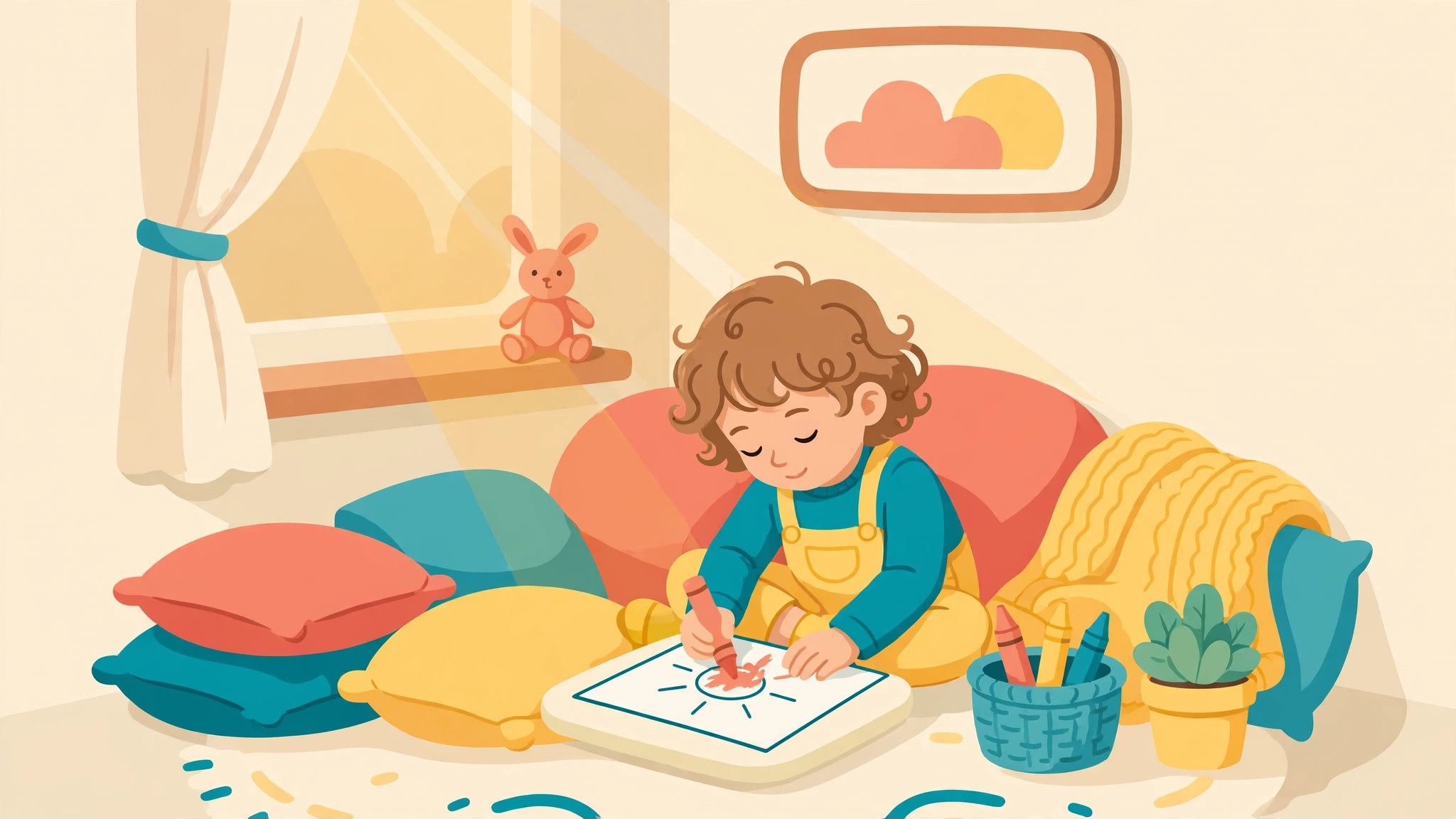
Every family knows the moment: the tower falls, the turn ends, the answer is no, and suddenly feelings are bigger than the room. Children do not calm down because they are told to, and most are not ready to talk about what happened while they are still upset. What helps many families is a standing, gentle routine that a child already knows, and coloring makes an excellent centerpiece for one. The repetitive motion is slow, the page asks nothing difficult, and there are no words a child has to find. This guide shows how to build a calm-down coloring routine that children actually use, without turning coloring into a punishment or a lecture.
Set up a calm-down corner before you need it
Choose a small, consistent spot: a cushion in a bedroom corner, a beanbag near a bookshelf, one end of the sofa. It should feel cozy rather than isolated, and it is a place a child may go to, never a place they are sent away to. Stock it lightly and keep the supply the same every time:
- A folder with five or six calm coloring pages, rotated weekly.
- Crayons or colored pencils in soft colors, in one small pot.
- One comfort object your child chooses, such as a stuffed animal or blanket.
- Optionally, a simple visual timer and a feelings picture card with four faces.
Introduce the corner on an ordinary, happy day. Let your child test it out, choose where the cushion goes, and color a page there while everything is fine. A routine first met in a storm rarely works; a routine practiced in sunshine often does.
The gentle routine, step by step
- Name the moment simply. Say one short sentence: Your body looks upset. Let's go to your corner. Take their hand or walk beside them. Fewer words are better right now.
- Offer the page, not a task. Place the folder nearby and say, You can color when you're ready. Some children start immediately; others need a minute of sitting first. Both are fine.
- Stay nearby, stay boring. Sit close without hovering. You might color your own page slowly. Avoid questions about the incident until the coloring has done its work, which is usually several minutes.
- Watch for the shift. Shoulders drop, breathing slows, the grip on the crayon loosens, humming sometimes starts. That is the routine working. Let it continue a little past the shift rather than ending at the first sign of calm.
- Reconnect briefly. When your child looks up or starts chatting, keep it light: That page looks peaceful. Are you ready to come back? Save any problem-solving for later, and keep it short.
Choosing pages that actually calm
Not every coloring page suits a wobbly moment. The best calm-down pages share a few features:
| Works well | Save for another time |
|---|---|
| Big, open shapes with thick outlines | Tiny, intricate mandalas with hundreds of sections |
| Gentle subjects: animals, gardens, stars, the sea | Exciting battle, racing, or scary holiday scenes |
| One clear picture per page | Busy pages where many characters crowd together |
| A page the child has enjoyed before | A brand-new, complicated challenge page |
Familiarity is calming, so it is fine, even helpful, to print several copies of a beloved page. Coloring the same sleepy owl for the fourth time is not a rut; it is the child choosing the most predictable thing available, which is exactly the point.
Words that help, words that wait
During big feelings, children process tone far better than content, so aim for short, warm, repeatable phrases: I'm right here. Take your time. This page is a good one. Save explanations, apologies, and rule reminders for after the reconnect step, when your child can actually hear them. If a sibling caused the upset, resist conducting the whole investigation from the calm corner. Deal with the practical bit, send the routine on its way, and let fairness conversations happen at the kitchen table later, with everyone settled.
Common mistakes that undo the routine
- Making coloring a consequence. If the corner appears only as a penalty, children resist it. Keep it available all day for anyone who wants it, including you.
- Insisting on finishing the page. The goal is a settled child, not a completed picture. Three minutes of coloring that ends in a hug is a success.
- Stocking too much. A huge binder of choices overwhelms an upset child. Five or six pages is a feature, not a limitation.
- Rushing the exit. Pulling a child back into the noisy room the second they quiet down often restarts the storm. Let the calm stretch a little.
Adjusting the routine by age
For three- and four-year-olds, keep everything small and sturdy: one very simple page, thick crayons that survive being squeezed, and sessions that may last only three or four minutes. Scribbling counts completely at this age; the routine is the destination, not the artwork. Five- and six-year-olds can usually choose their own page from the folder and carry it to the corner themselves, which is a milestone worth quietly celebrating. Seven- and eight-year-olds may prefer slightly more detailed pages and a touch more privacy, so offer the same corner with less commentary, and perhaps a page that includes a few calm words to trace. Across all ages, the rules stay identical: nobody is in trouble in the corner, nobody has to finish, and an adult is always nearby.
Making it a family habit
The routine grows stronger when calm-down coloring is just something your household does. Some families color together after school for ten minutes as a landing ritual, or keep one page on the kitchen table during the busy pre-dinner hour. Older children can be offered a slightly more detailed page and the same quiet respect. And give the routine time: most children need several low-stakes rehearsals before they reach for the folder themselves, which is the quiet victory this whole setup is aiming for. One last note: coloring routines are an everyday comfort tool, not a solution for every concern. If worries or big feelings ever seem to be taking over your child's days, that is worth raising, and your child's teacher or pediatrician can help you think it through.
Frequently Asked Questions
How long should a calm-down coloring session last?
Let the child lead. Most sessions run five to fifteen minutes, and the session is done when their body settles and they look up, chat, or wander off happily. Never require a finished page; a half-colored page and a calmer child is exactly the result you want.
My child refuses to go to the calm-down corner. What then?
Do not force it. Bring the folder to wherever they are, set it within reach, and sit nearby yourself. Many children accept the crayons before they accept the corner. Keep offering it in small moments, and let them see you use the spot too.
Are mandalas good calm-down pages for young children?
Usually not for under-sevens. Intricate mandalas demand precision that frustrates an already upset child. Choose big, simple, familiar pictures with thick outlines instead: a sleeping animal, a rainbow, a garden. Save detailed mandalas for older children who already enjoy them during happy, focused times.
Can coloring replace talking about what happened?
No, and it is not meant to. Coloring settles the body first so that a short, kind conversation becomes possible afterwards. Do the reconnect briefly, return to normal life, and handle any teaching or apologies later when everyone, including you, is fully calm again.