Benefits of Coloring Pages for Kids: Fine Motor Skills, Focus & Creativity
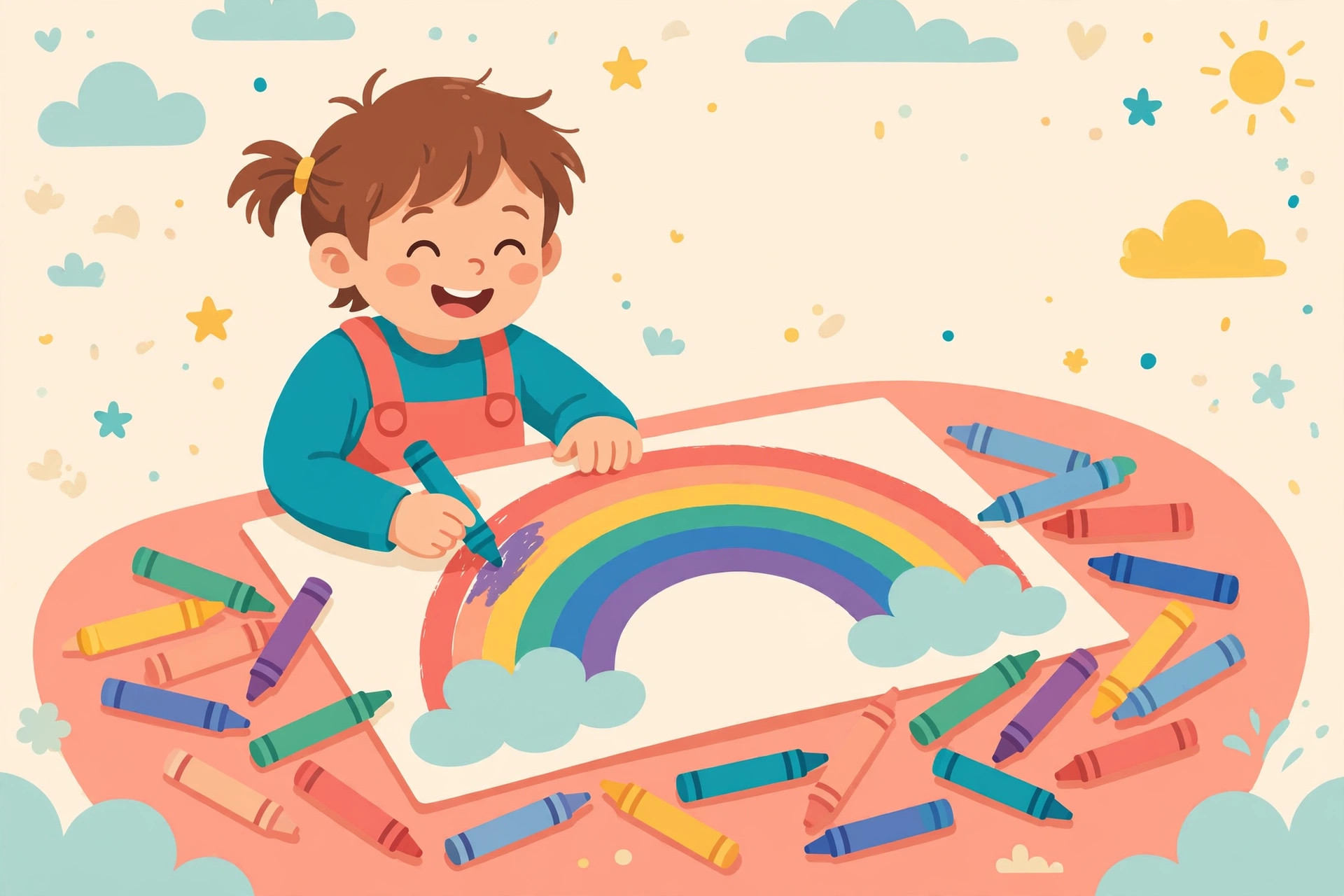
Coloring has a reputation as the activity you hand a child when you need ten quiet minutes. It does do that — gloriously — but stopping there undersells it. Behind the crayons, coloring is quietly training the exact skills your child will use for writing, math, reading, and sitting still in a classroom. Here's what's actually happening on the page, and how to help your child get the most from it.
It builds the hand strength writing depends on
Every coloring stroke is a small workout. Gripping a crayon, pressing hard enough to lay down color, and steering it inside a shape uses the same small hand and finger muscles your child will later use to form letters. Kids who color often tend to find early handwriting less tiring, simply because their hands have done thousands of practice reps.
You can see the progression in any stack of old coloring pages:
- Toddlers scribble in big arm movements, color flying everywhere.
- Preschoolers slow down, choose colors on purpose, and try to stay near the lines.
- Kindergarteners work in smaller areas, switch colors for details, and finish whole pages.
That progression isn't about talent. It's motor control being built, one page at a time.
It trains focus and patience
Finishing a coloring page asks a child to do something genuinely hard for a young brain: stay with one task, resist distractions, and keep going when it's not done yet. A detailed page can take a four-year-old twenty minutes of sustained attention — a real achievement at that age.
Coloring also teaches a gentle form of planning. Which color goes where? What do I do first, the big sky or the tiny flowers? Those small decisions are early problem-solving, rehearsed in a low-stakes, no-wrong-answer setting.
It gives feelings a safe place to go
Young children have big feelings and small vocabularies. Coloring offers a way to express and settle emotions without needing words. Many parents notice that a child who comes home wound up from preschool will visibly relax after ten minutes of coloring — the repetitive motion is naturally calming, a bit like a rocking chair for the hands.
Color choices and drawings can also open conversations. "You colored the dog purple and gave him a huge smile — tell me about him" often gets you a longer, richer answer than "how was your day?"
It quietly prepares kids for school
Teachers love coloring for reasons that have nothing to do with art:
- Color and shape recognition — naming colors and noticing shapes builds early math and reading vocabulary.
- Left-to-right, top-to-bottom movement — scanning a page in an orderly way mirrors how we read.
- Crossing the midline — reaching across the page to color the far side strengthens the coordination reading and writing need.
- Following through — starting, persisting, and finishing is the rhythm of every school assignment to come.
Getting more from every page, by age
| Age | What helps most | Try this |
|---|---|---|
| 18 months–2 years | Thick crayons, big blank-ish pages | Short sessions, name colors as they scribble |
| 3–4 years | Simple pictures with thick outlines | "Can you color just the hat red?" listening games |
| 5–6 years | Detailed pages, pencils and markers | Patterns, two-color challenges, coloring "homework" beside you |
Common mistakes that shrink the benefits
- Correcting their colors. A green sky is not a mistake; it's imagination working exactly as it should.
- Choosing pages that are too hard. Tiny, fussy details frustrate beginners. Match the page to the child, not the other way round.
- Hovering. Coloring works best as an independent activity. Set them up, then let them be.
- Rushing to the next page. Finishing is where the patience benefit lives. Celebrate completed pages — fridge them.
Keeping it fresh
When coloring starts to feel stale, change one thing: new tools (gel pens, watercolor pencils), a giant page taped to the floor, coloring outside on a blanket, or coloring the same page twice to compare. A small novelty restarts the whole engine.
Choosing pages that teach the most
Not all coloring pages do equal work. For beginners, big simple shapes with thick outlines build confidence and control, while intricate mandala-style pages suit older kids with patience to spare. The biggest lever, though, is interest: a child who loves trucks will happily color ten truck pages, and repetition is where skill grows.
Some pages pull double duty. Alphabet and number coloring pages pair motor practice with early literacy, animal pages invite counting legs and naming body parts, and seasonal pages quietly teach the rhythms of the year. Keep a small, varied stack ready so your child can choose — choosing is itself part of the engagement.
Color side by side sometimes
Most coloring should be independent, but occasionally pull up a chair and color your own page alongside your child. You are modeling everything this article describes: patience when a section is fiddly, pleasure in slow work, and recovery from a color that slips outside the line. Conversation flows differently shoulder-to-shoulder than face-to-face, and many parents find coloring time produces the day's best small talk. It also gives you a natural window to notice progress — "your hands are so much steadier than last month" — and to mean it.
One more quiet benefit deserves a mention: coloring respects every child's pace. There is no score, no timer, and no opponent, which makes it one of the few activities where a cautious child and a whirlwind child can both succeed at the same table, side by side, each entirely absorbed.
Most of all, keep it joyful. The moment coloring becomes a chore with rules about lines and "right" colors, the benefits drain away. Let it be what it has always been: a child, some color, and a page that's entirely theirs.
Frequently Asked Questions
How long should my child color each day?
There's no magic number. Ten to twenty minutes of happy, focused coloring is a great session for most preschoolers, but let your child lead — some will happily go for forty minutes, others are done in five. Short and regular beats long and forced every time.
Is coloring better than drawing for young kids?
They do different jobs, and kids benefit from both. Coloring inside shapes builds control and patience, while free drawing builds imagination and storytelling. If you only have time for one today, follow your child's mood — interest is what turns practice into progress.
My child always scribbles outside the lines. Should I worry?
For toddlers and young preschoolers, coloring outside the lines is completely normal — control develops gradually through practice, not correction. Offer simpler pages with bigger shapes and thicker outlines, and praise the effort. If you're ever concerned, your child's teacher or pediatrician can help you judge what's typical.
Are coloring apps just as good as paper?
Apps are fine entertainment, but they skip the physical benefits: grip strength, pressure control, and real hand-eye coordination. A stylus sliding on glass simply doesn't exercise small hands the way a crayon on paper does. Keep paper coloring as the main course and apps as an occasional treat.